Nobody can tell you what your parking lot costs to pave without standing on it. Anyone who quotes a number over the phone is guessing, and you don't want a guesser building something that has to survive twenty Calgary winters.
What we can do is show you exactly what sets the price. Once you know the factors, you can read any quote that lands on your desk and understand what you're actually being sold. That matters more than any number, because the range between quotes for the same lot can be enormous, and the difference is almost never profit margin.
Size, and why small jobs cost more per square metre
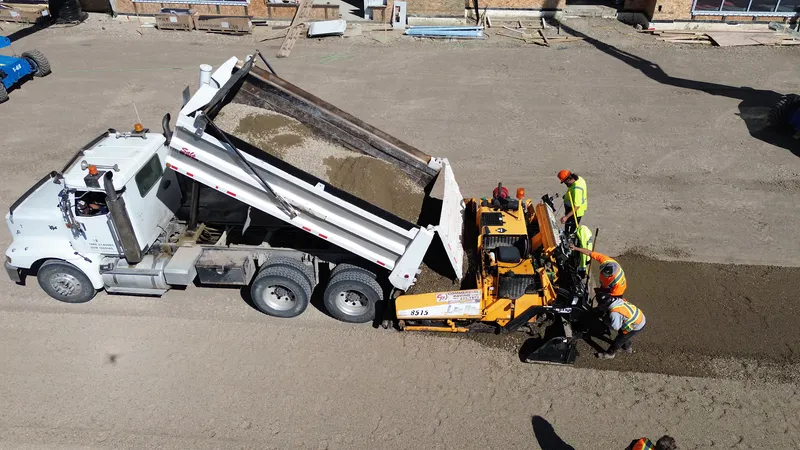
Every paving job carries fixed costs that have nothing to do with how big the lot is. Mobilizing a paver, rollers, and trucks to the site costs the same whether they lay asphalt for two hours or two days. Hot mix is batched at a plant and hauled in; small orders cost more per tonne.
This is why a 500 square metre lot doesn't cost half of what a 1,000 square metre lot costs. The bigger the job, the further those fixed costs get spread, and the better the per-square-metre economics get. It's also why bundling work makes sense: if the lot needs paving and the approach lane is marginal, doing both in one mobilization is cheaper than two separate projects a year apart.
Asphalt thickness, set by what drives on it
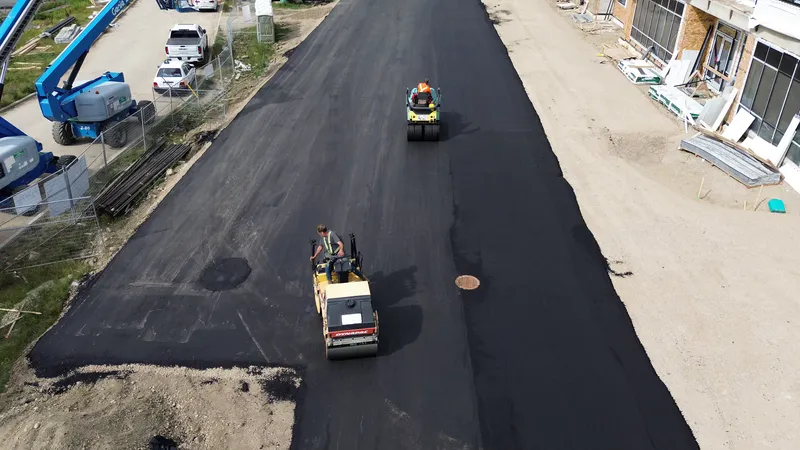
A lot that only ever sees cars needs less asphalt than a loading zone that takes tandem-axle delivery trucks every morning. Thickness is specified in millimetres, laid in compacted lifts, and it's one of the biggest line items on a quote because asphalt is priced by the tonne.
This is the first place quotes diverge. If one contractor prices 50 mm and another prices 75 mm for the same lot, the second quote is bigger for a reason. Neither number is wrong by itself; the question is which one matches the traffic your lot actually takes. A quote that doesn't state thickness at all is the real red flag.
The base: the biggest variable, and the one you can't see
The gravel base under the asphalt decides how long the surface lives. It's also the largest source of cost differences between lots that look identical from the surface.
If the existing base is sound, paving over a corrected and re-compacted base is straightforward. If the base was undersized when the lot was first built, or has gone soft from years of water getting in, it has to be rebuilt: excavate, remove unsuitable material, bring in gravel, compact it in lifts. That's excavation, trucking, aggregate, and compaction time, and it can matter more to the final price than the asphalt itself.
This is why site visits exist. We probe the base condition before quoting, because the alternative is discovering soft spots after the old surface is ripped out, and nobody enjoys the change-order conversation that follows.
Access, obstacles, and drainage
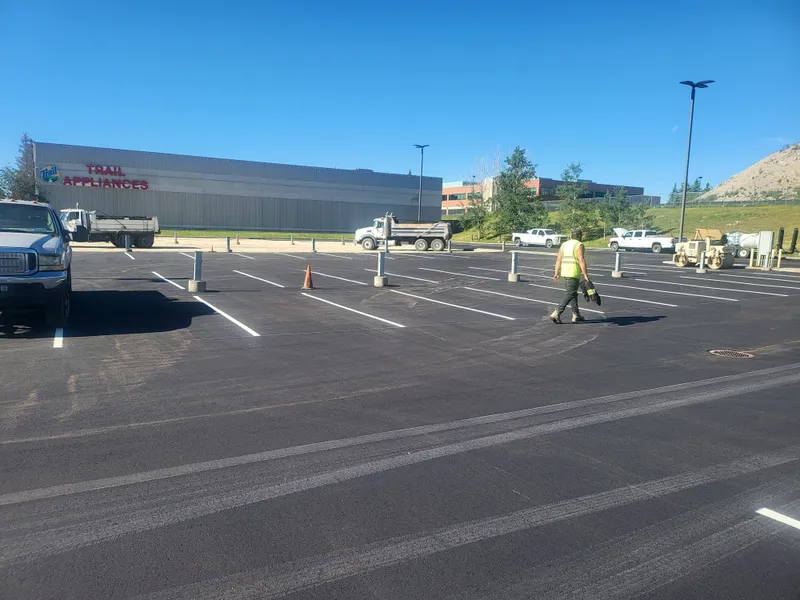
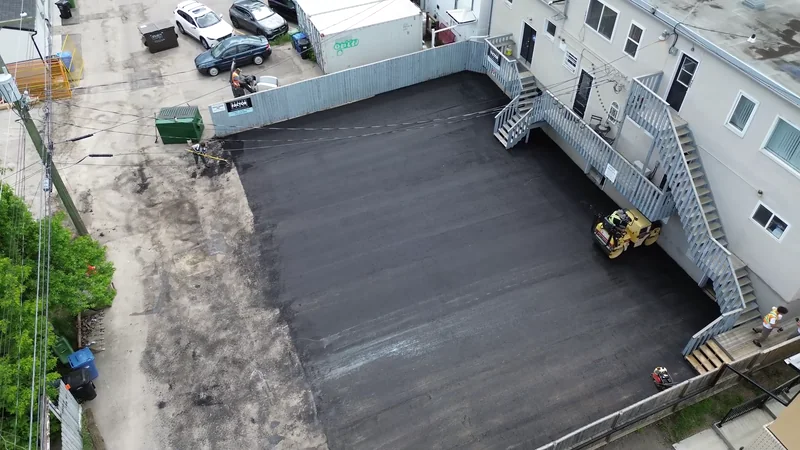
Open rectangles pave fast. Lots with islands, tight drive lanes, underground parkade ramps, cart corrals, and bollards pave slowly, because equipment has to work around every obstacle and the hand-work areas multiply.
Drainage corrections add cost too. If water pools on the lot today, paving over it preserves the problem under a new surface. Correcting the grade so water actually leaves the pavement adds work up front and is one of the better investments on the whole quote, because standing water plus freeze-thaw is what kills Calgary asphalt.
Removal and disposal of the existing asphalt is its own line: cutting, breaking, loading, and trucking it out. Deeper asphalt or a buried second layer from a previous life of the lot means more trucks.
Why the cheap quote is usually the expensive one
When one quote comes in far below the others, it's rarely because that contractor found an efficiency the others missed. It's because something is thinner, shallower, or missing. Less asphalt. Base work scoped out. Cold patch where hot mix belongs. No compaction spec. No warranty behind it.
A thin lift over an uncorrected base can look identical to proper work on the day the crew leaves. The difference shows up in the second or third spring, when the surface starts alligator cracking over the soft spots, and the money saved on the cheap quote goes into repairs on a surface that should have been years from needing any.
Watch for quotes that don't state asphalt thickness, don't describe what happens to the base, don't mention compaction, or offer a discount for cash. Every one of those is the quote telling you where the missing money went.
How to actually budget for it
Get a site visit and a written quote that specifies thickness, base scope, compaction, and drainage. Get a second one if you like, and compare the specifications line by line before comparing the totals. A bigger number for a thicker spec is not a more expensive quote; it's a different product.
Think in cost per year of service rather than sticker price. A properly built lot in Calgary runs 20 to 30 years. A lowball job can need major work in five. Divide the price by the realistic lifespan and the cheap quote usually stops being cheap.
Site reviews and written quotes are free across Calgary, and the visit usually takes half an hour. You'll walk away knowing what your lot actually needs, whether or not we're the ones who end up building it.