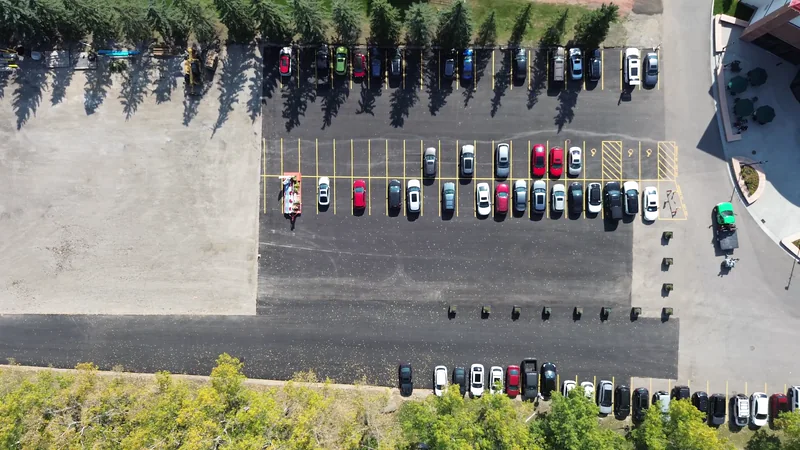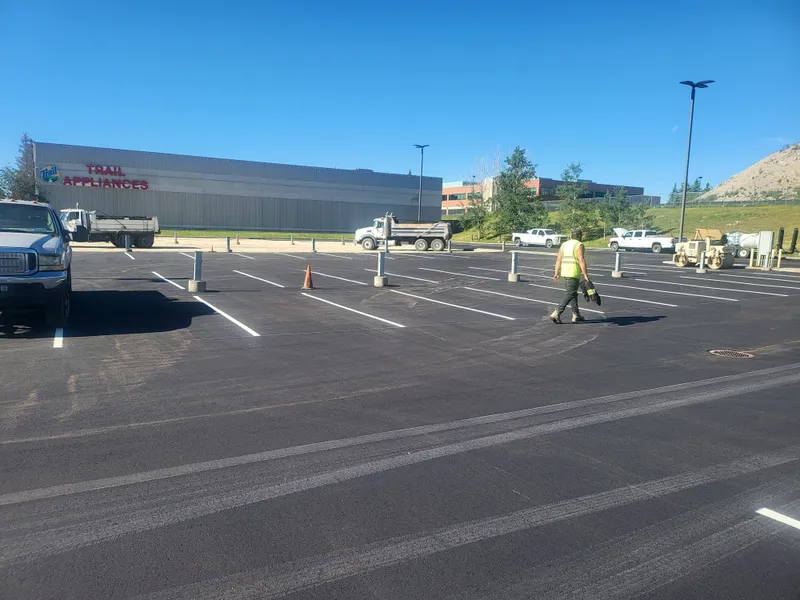
Calgary asphalt does not usually fail because the asphalt wore out. It fails because water got underneath it and the temperature kept crossing zero. That is the freeze-thaw cycle, and on the Prairies it runs dozens of times a year, every spring and fall and through every winter chinook.
A surface built to handle it can last 20 to 30 years. A surface that ignores it can be cracking within five. The difference is almost never the asphalt itself. It is the base, the drainage, and the compaction underneath. Here is how a job gets built to take the cycle.
What freeze-thaw actually does to pavement
Water expands by roughly nine percent when it freezes. When that water is sitting in the gravel base under your pavement, or in a crack on the surface, every freeze pushes the surrounding material apart. Every thaw leaves a slightly larger void. Multiply that by dozens of cycles a season and the structure under the asphalt slowly comes apart.
Two failures show up most often. Frost heave lifts sections of pavement when saturated ground freezes and swells, then drops them unevenly when it thaws. Base saturation softens the gravel layer so it can no longer support traffic, and the asphalt above flexes, cracks, and ruts. Both come back to the same root cause: water that should never have been allowed to sit under the surface.
It starts with keeping water out: grading and drainage slope
The cheapest and most effective defense against freeze-thaw is not letting water pool in the first place. That is a grading problem, and it gets solved before any asphalt is placed.
The site is graded to a positive drainage slope, commonly around two percent, so water runs off the surface to catch basins, swales, or off-property drainage points rather than ponding in low spots. Grades are set to carry water away from buildings, entrances, and the edges of the lot. A surface that looks flat to the eye is almost never actually flat. The slope is deliberate.
Ponding is the warning sign. Anywhere water stands after rain or snowmelt is a spot where it will soak in, reach the base, and freeze. Correcting grade at install time is far cheaper than chasing the cracking, potholes, and base failure that standing water causes a few winters later.
A base compacted in lifts
The gravel base is the structural foundation of the pavement. Asphalt spreads traffic loads across the base below it, so a base that stays stable through forty-degree temperature swings is what keeps the surface intact.
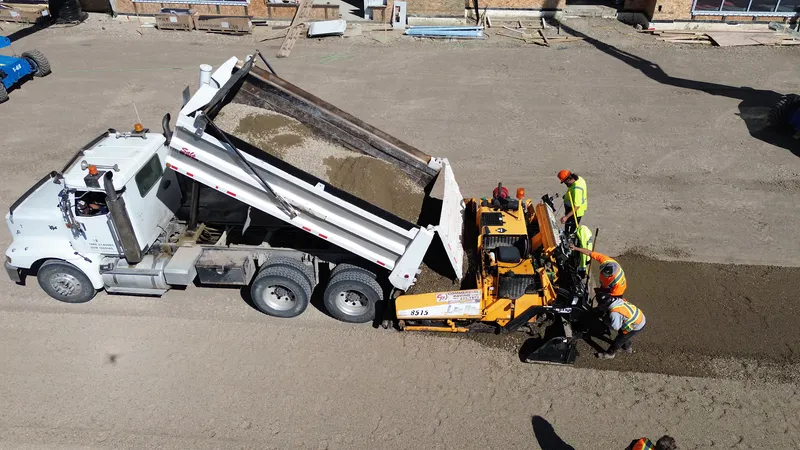
Two things make a base hold up to freeze-thaw: depth and compaction. The base is built to the depth the project calls for based on traffic and soil, and it is placed and compacted in lifts rather than dumped in one thick layer. Each lift, often in the range of 100 to 150 millimeters, is compacted to specification before the next goes on top. A base compacted in lifts reaches a density that a single dumped layer never will.
Density matters because a loose or poorly compacted base holds water in its voids, and water held in the base is water waiting to freeze. A properly compacted base is tighter, drains better, and gives the freeze-thaw cycle far less to work with. The subgrade underneath gets compacted too, so the whole structure is stable from the ground up before paving begins.
Hot mix at the right depth, properly compacted
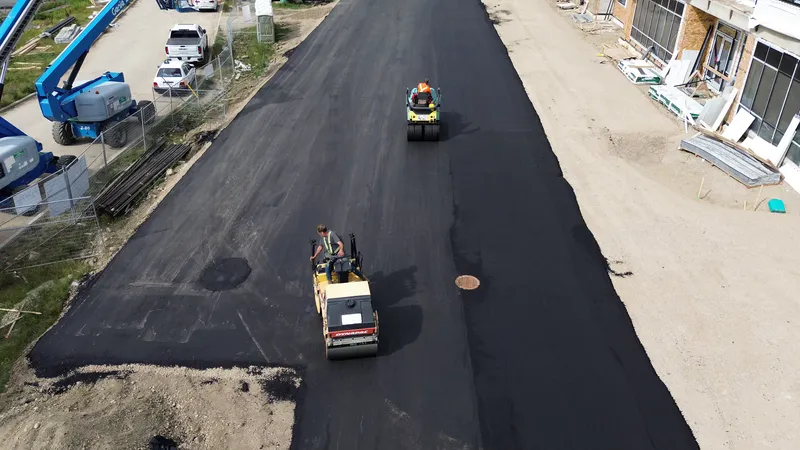
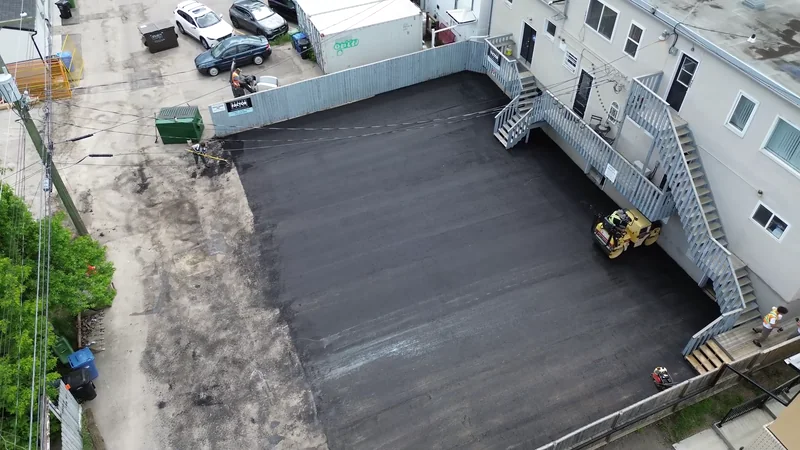
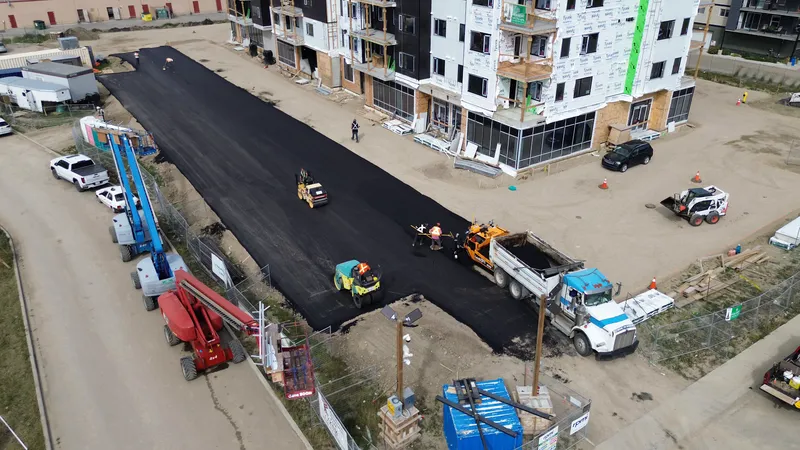
The asphalt mat is the last line of defense, and it only works if it is built tight. Hot mix asphalt is placed at the correct thickness for the traffic load, then compacted with rollers in the proper sequence while it is still hot enough to move.
Compaction is where thin-spec jobs cut corners, and it is exactly what freeze-thaw exploits. Asphalt that is not compacted to density is full of interconnected air voids. Those voids let water seep into the mat, and once water is inside the asphalt, freezing pulls it apart from within. A well-compacted mat is dense and effectively sealed, so water runs off the top instead of soaking in.
This is also why hot mix is used on new work and cold patch is not. Cold patch does not bond or compact like hot mix, and it breaks down in a single freeze-thaw cycle. It has a place as an emergency winter pothole fix when the hot plants are closed. It is not a finished surface.
Edges, tie-ins, and crack sealing
The outer edge of a mat is the most vulnerable part of any asphalt surface, because it is unsupported and water can attack it from the side. Edges get feathered or sealed and tied cleanly into curbs, concrete, drains, and existing pavement so water cannot get in at the seams.
Once a surface is down, the maintenance version of the same principle is crack sealing. A narrow crack sealed at the right moment keeps water out of the base for a few dollars. The same crack left open lets water in, the base softens, and a small fix becomes a large one. Sealing cracks before winter is one of the most cost-effective things a property owner can do to fight freeze-thaw on an existing lot.
Why it adds up to a longer-lasting surface
None of these steps is dramatic on its own. Together they are the difference between a lot that lasts five years and one that lasts twenty-five. Grade keeps water off the surface. A deep, compacted base keeps it from sitting underneath. A dense mat keeps it from soaking in. Sealed edges and cracks keep it out at the seams.
When a Calgary lot fails early, the cause is almost always one of these steps skipped or under-built. That is why we put as much attention into the base and the drainage as into the asphalt people actually see. The visible surface is the part that lasts. The invisible work underneath is the part that decides how long.
Bottom line
Freeze-thaw is not a problem you can seal over after the fact. It is built out of a job, or built into it, on the days the base and grade are set. If you are getting quotes for a parking lot, driveway, or repair, ask as many questions about the base, the drainage slope, and the compaction as you do about the asphalt on top.
Commercial Paving builds for the Calgary climate on every job, with our own crew and equipment. We offer free site reviews and written quotes across Calgary. We will walk the property, look at where the water goes, and give you a straight answer about what the surface needs.