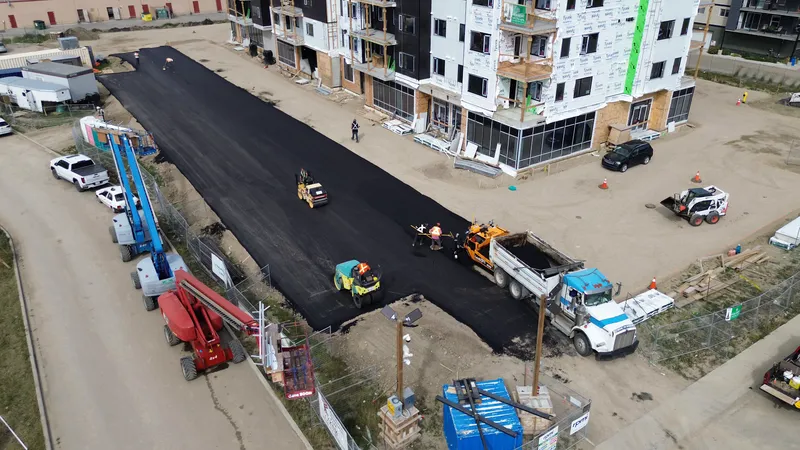
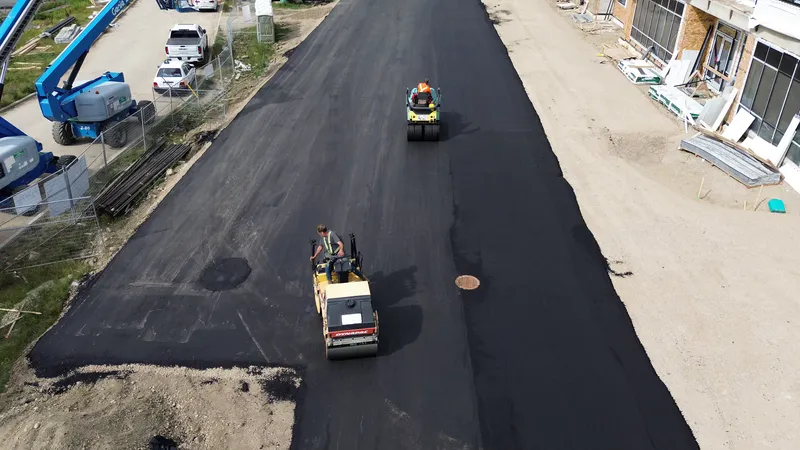
New asphalt looks finished the moment the rollers pull away. It's black, smooth, and solid underfoot. The surface you're looking at, though, is the youngest it will ever be, and how it's treated in the first few days and the first month decides how good it looks years from now.
The most common question we get after a paving job is simple: when can we drive on it? Here's the honest answer for Calgary conditions.
The short answer
For normal passenger vehicles, plan on staying off fresh hot mix asphalt for at least 24 to 72 hours. In cooler spring and fall weather it firms up toward the short end of that range. In the heat of a Calgary summer it needs the longer end, sometimes more.
Foot traffic is fine much sooner, usually within a few hours of the surface cooling. Heavy vehicles, loaded trailers, and anything that sits in one spot need considerably longer. Each of those is covered below.
Asphalt cures, it doesn't just dry
It helps to understand what's actually happening. Asphalt is not like concrete, which chemically sets, and it's not like paint, which dries. Hot mix asphalt is placed at around 150 degrees Celsius and becomes drivable once it cools to roughly air temperature. That initial cooling is what the 24 to 72 hour window is about.
Full curing is a slower process. Over the following 6 to 12 months the asphalt continues to harden as the lighter oils in the binder oxidize and the surface gains its final strength. During those first months the pavement is more easily scuffed, marked, and dented than it will ever be again. It's completely usable in that time. It just rewards a little care.
Foot traffic
People can usually walk on a new surface within a few hours, once it has cooled enough that it no longer feels warm or tacky.
Narrow point loads are the exception. Heels, bike kickstands, trailer jacks, and furniture legs concentrate weight on a small area and can leave a mark in warm asphalt for the first week or two. On a hot day, a kickstand will sink into a brand new lot. A scrap of plywood under the point solves it.
Cars and regular parking
Driving across new asphalt and parking on it are two different demands. Rolling traffic is easier on a fresh surface than a parked vehicle that sits in one place under the summer sun.
For driving, the 24 to 72 hour guideline applies. For parking, give it a few extra days where you can, and avoid leaving a vehicle in the exact same spot for long stretches in the first couple of weeks.
The other summer hazard is the power steering divot. Turning the wheel while the car is completely stopped twists the tire against soft asphalt and can leave a scuff. Keep the car rolling, even slowly, while you steer, and the problem disappears.
Heavy vehicles, dumpsters, and trailers
This is where most early damage happens on commercial lots. A loaded garbage truck, a delivery semi, a dumpster dropped onto a fresh mat, or a trailer parked on its jack all put serious point loads on pavement that has not yet gained full strength.
Keep heavy and concentrated loads off new asphalt for at least a week, and longer in hot weather. For anything that sits, like dumpsters, trailer jacks, and equipment outriggers, put a wide board or a steel plate under the contact point to spread the load for the first month or more.
On a commercial job we flag the specific spots on your lot that take this kind of traffic and talk through timing before we leave the site.
Calgary heat is the variable that matters most
Air temperature changes everything about these timelines. Calgary summers swing from cool mornings to hot afternoons, and asphalt softens as it heats up. A lot that feels rock solid at 8 a.m. can be impressionable at 3 p.m. on a 28 degree day.
In the cooler shoulder seasons, spring and fall, asphalt cools and firms faster, and the early windows shrink. In a July heat wave, everything described above shifts to the longer end.
The numbers in this article are guidelines. The temperature on the days right after your job decides where in those ranges you land, which is why we give every client specific guidance based on the forecast.
Protecting a new surface in the first month
Spread out point loads. Boards or plates under kickstands, jacks, dumpster wheels, and any leg that would otherwise dig in.
Don't seal it too soon. New asphalt needs to cure before sealcoating, generally several months and often a full season. Sealing a surface that has not released its oils can trap them and cause problems. There's no rush.
Watch the turning. Power steering scuffs from stationary turning are the most common cosmetic complaint on new lots, and they're entirely avoidable.
Mind the edges. Until the surrounding ground settles and any landscaping is restored, the outer edge of a new mat is the most vulnerable part. Avoid running tires off the edge in the first few weeks.
Keeping a business open during paving
For a commercial parking lot, the real question usually isn't can we drive on it. It's how do we keep the property running while it's being paved. That's a planning problem, and it's one we solve on most jobs.
On larger lots we phase the work, paving one section while traffic uses another, then switching. We schedule around delivery windows, garbage pickup, and peak business hours where we can. The goal is a lot that reopens on a clear timeline with no surprises for your tenants or customers.
If access planning matters for your property, raise it when we do the site visit and we'll build the phasing into the quote.
Bottom line
For most people the answer is one to three days for cars, a week or more for heavy vehicles, and a little extra care for the first month while the surface gains its full strength. Calgary's weather on the days after your job moves those numbers, which is why we give every client specific timing rather than a one size fits all rule.
If you're planning a paving or repaving project and need to map out access and downtime, we offer free site reviews and written quotes across Calgary. We'll walk the property, talk through scheduling, and give you a clear plan before any equipment shows up.