When a parking lot starts looking rough, the first question is rarely which contractor to call. It's whether the lot needs a patch here and there, a more serious section repair, or a full removal and replacement. The right answer affects budget by an order of magnitude.
Here's how we think about it on a site visit.
Targeted patching is the right call when
The damage is localized. A few potholes, a damaged loading-zone area, a section where a dumpster sat too long. The rest of the lot is structurally fine.
The base under the failed section is still solid. Sometimes a pothole is just a surface failure. The fix is straightforward: clean it out, prime it, fill with hot mix, compact.
The lot is still within its expected service life. A 12-year-old lot with three potholes is a maintenance problem, not a replacement problem.
Patching is the cheapest option per square meter. It gets the lot functional and safe quickly without disrupting business operations for long.
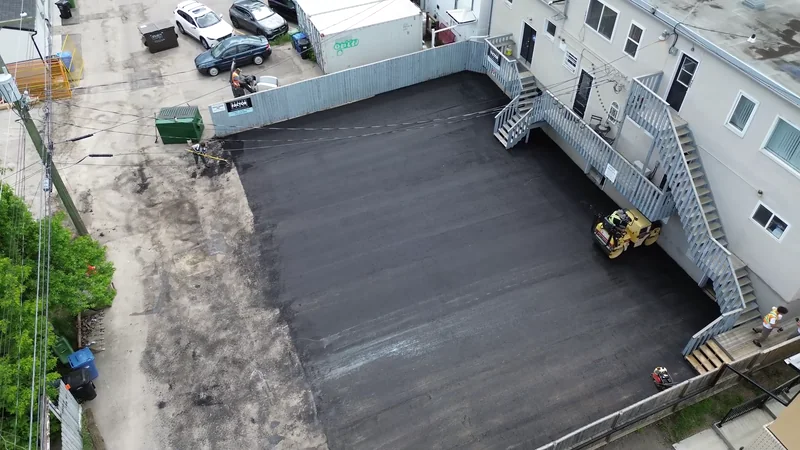
Remove-and-repair is the right call when
The asphalt itself has failed all the way through, but the surrounding lot is still in good shape. This often shows up as alligator cracking: a tight pattern of interconnected cracks that looks like reptile skin. It means the layer underneath is moving and the asphalt above can't stay rigid anymore.
Standing water has been collecting in a section, suggesting drainage or grade problems. Patching over it doesn't fix the cause. The water still pools, it still freezes, the patch fails again.
A tree root, frost heave, or buried obstacle has lifted or cracked a specific area. The fix is to dig it out, address the cause, and lay fresh hot mix.
Remove-and-repair costs more per square meter than patching but far less than full repaving. It's the right tool when the failures are too deep for a patch but too localized for full replacement.
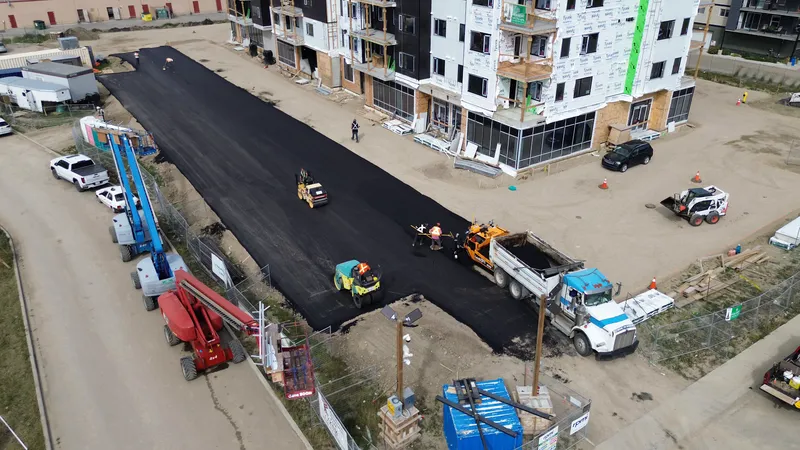
Full removal and replacement is the right call when
The lot is past its expected service life, and patches are showing up in many spots faster than they can be addressed. At some point the cost of chasing failures across a 25-year-old lot exceeds the cost of removing and replacing the whole thing.
The base is bad across most of the lot. If the gravel underneath was undersized or never properly compacted, no amount of surface work will save it. This is the hardest case to accept because it usually means the original installation was the problem, but it's also the case where patching is most clearly throwing money away.
Major site changes are happening. Adding building square footage, changing traffic flow, reworking drainage, upgrading curbs and accessibility. If the base is being touched anyway, that's the moment to do the surface right.
A buyer or tenant is requiring it. Property transactions often surface deferred maintenance. A new tenant may require resurfacing as part of the lease.
How to read your own lot
Stand at one corner and walk a slow loop. Note where you see potholes, where alligator cracking is showing up, where standing water collects after rain or snowmelt, and where the surface feels uneven underfoot.
If most of the lot is intact and the failures are isolated, you're probably in patching territory. If failures are spread across many areas, the base is suspect, and the answer is closer to full replacement.
A site visit from someone who paves for a living is the cheapest part of the whole process. We do site reviews and written quotes for free across Calgary. The visit itself usually takes 30 minutes and you'll walk away with a clear answer about which option fits the lot.
Common mistake: deferring too long
The single most expensive decision property owners make is letting a small failure spread for two or three years before calling someone. A pothole that could have been patched for a few hundred dollars turns into a section repair, then a base failure, then a reason to consider replacing a much larger area.
This is partly because seeing a problem regularly makes it feel manageable. It also gets harder to justify maintenance budget every quarter when the lot still works. By the time the lot stops working, the cheapest options are off the table.