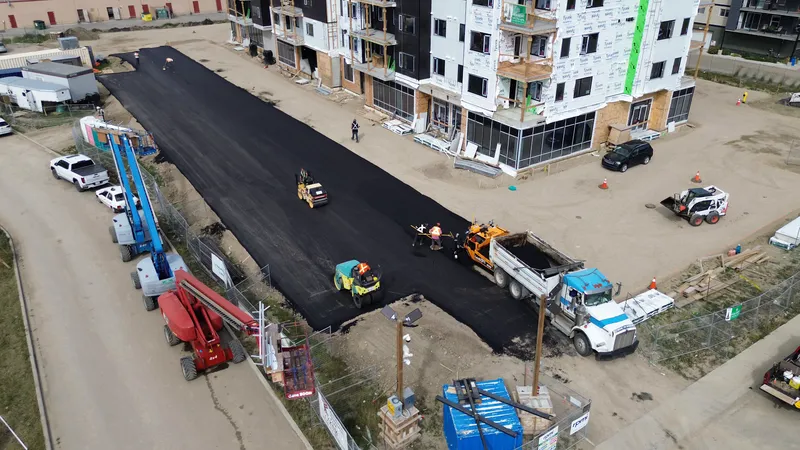
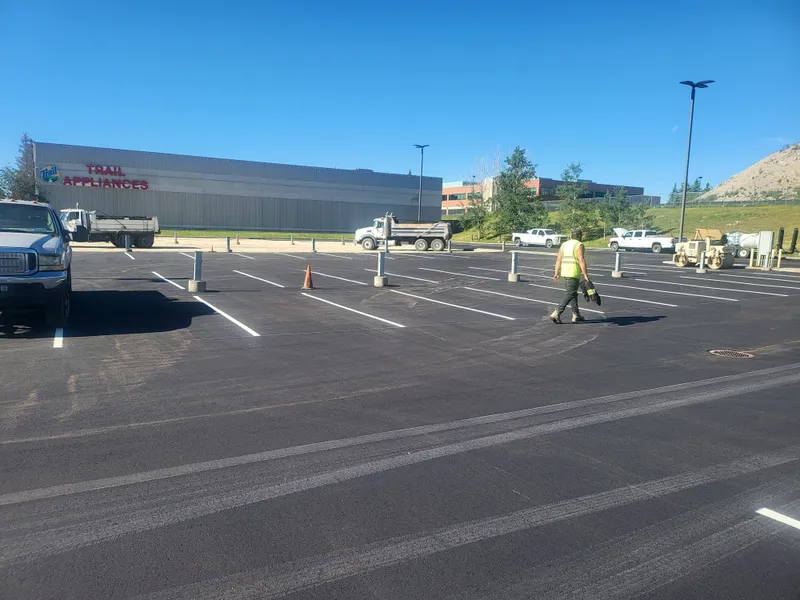
Asphalt is asked to do a lot in Calgary. It carries traffic, supports snow-removal equipment, holds shape across forty-degree temperature swings, and resists water that freezes and thaws every spring and fall. A surface that's well built and reasonably maintained can last decades. A surface that was rushed, placed over a poor base, or never sealed at the right time can fail in well under ten years.
Numbers people throw around online are usually wrong for Calgary because they assume mild climates. Here are realistic ranges based on what we see on Calgary properties.
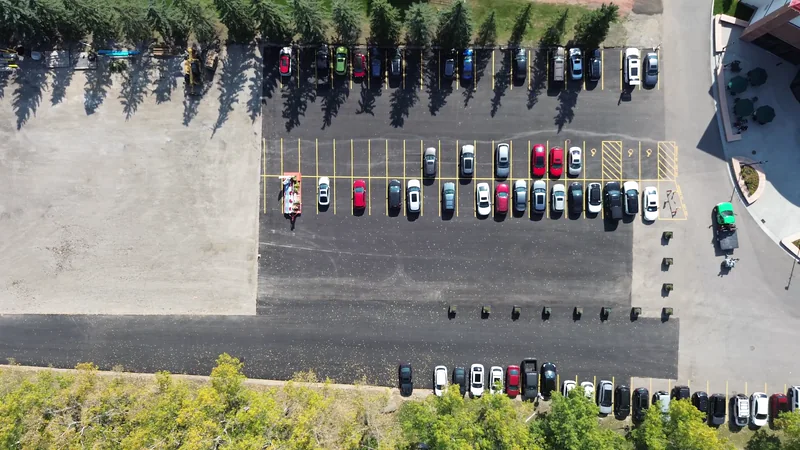
Commercial parking lots
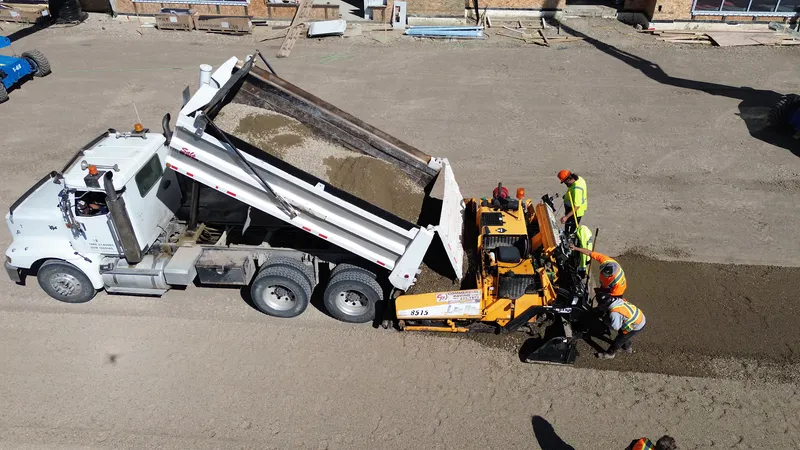
A commercial parking lot built properly, on a properly compacted gravel base, with hot mix asphalt at the right thickness for the traffic load, will commonly last 20 to 30 years before full removal and replacement is needed. That assumes routine patching of small failures, crack filling at the right moments, and seal coating where it makes sense.
The lots that fail well before that almost always have a base problem. The asphalt itself is not usually the weak point. When water finds its way under the surface and freezes, the base shifts. Cracks open. Water gets in further. The cycle accelerates. By year seven or eight, the lot looks like it needs major work.
Heavy traffic shortens these numbers. Industrial yards with constant tractor-trailer movement, garbage trucks turning hard on a single point, or a lot of forklift activity will compress that 20 to 30 year range down to 15 to 20.
Residential driveways
A residential driveway built to the same standards as a commercial lot will commonly last 20 to 25 years in Calgary. The traffic load is much lower, but the freeze-thaw exposure is the same.
Driveways tend to suffer most at the edges. When the ground softens in spring and a tire rolls onto unsupported asphalt at the edge, the edge crumbles. This is why driveway edges are the first to need patching, regardless of how well the rest of the surface is holding up.
Acreage approaches and long driveways
Acreage paving lasts about as long as residential driveways, sometimes longer because traffic is even lighter. The bigger risk on acreages is base preparation: the soil is often not as compacted as a serviced city lot, and unsuitable fill needs to be removed and replaced before paving. Skip that step and the surface will telegraph every soft spot underneath within a couple of years.
Pathways and walkways
Asphalt pathways carry the lightest load of any application, so they often outlast the surrounding landscape that gets remodeled around them. 20 to 30 years is normal. Width and base depth still matter. A path built too narrow gets damaged at the edges by mowers and pedestrians stepping off. A path built on a thin base flexes under freeze-thaw and cracks early.
What shortens asphalt life in Calgary
Poor base preparation. Above all else. If the gravel base is too thin, not properly compacted, or sitting on unsuitable fill, the surface above is on borrowed time.
Standing water and poor drainage. Asphalt is reasonably waterproof when intact, but cracks let water reach the base. Standing water freezes, expands, and lifts sections of pavement. Proper grading at install time matters more than any sealcoat.
Cold patch on new work. Cold patch is a temporary repair compound used in winter when hot mix isn't available. It does not bond like hot mix and starts breaking down within months. Using cold patch as a finished surface on new paving is one of the fastest ways to shorten the life of an installation.
Skipping crack filling at the right moment. A crack that's narrow and stable can be sealed cheaply. Left alone, it widens, water gets in, the base softens, and what was a $200 fix turns into a $4000 patch.
Heavy point loads on residential driveways. A loaded dumpster sitting on a driveway in spring, a heavy RV parked on the same square foot for years, a sharp turning movement from a delivery truck. All of these can punch through a residential-grade installation.
What extends it
Spending the time and money on the base before any asphalt arrives. This is the single biggest predictor of how long the surface will last.
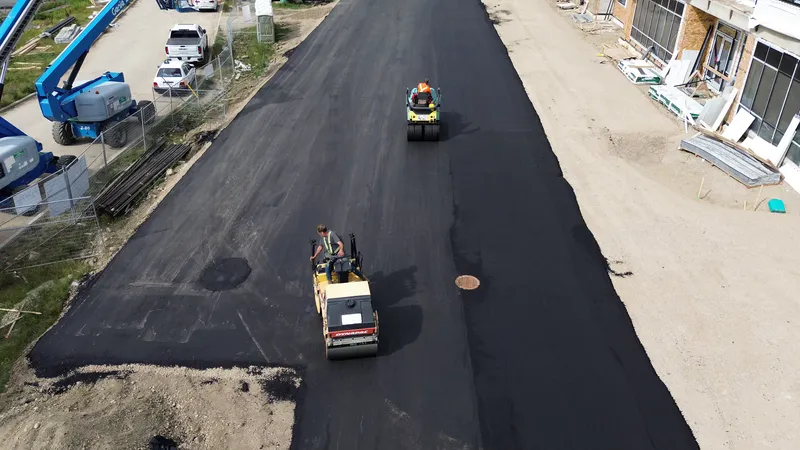
Hot mix, properly compacted, at the right thickness for the application. Not cold patch, not undersized, not under-compacted.
Crack filling at the right moments. Not too early, not too late. We can advise on timing during a site visit.
Catching small failures before they spread. Patching one square meter today is far cheaper than patching ten next year.
Bottom line
Asphalt in Calgary is a long-term investment when it's installed properly. The variation in life expectancy comes almost entirely from base quality, drainage, and maintenance, not from the asphalt itself. If you're being quoted for a paving project, ask the contractor as many questions about the base as you do about the surface.
If you'd like a written quote for new paving, repair, or a full removal and replacement, we offer free site reviews across Calgary.